
Sources for Hyattsville Previous Residents
Treat past residents of an address as a timeline built from several record types. The current assessment entry anchors the parcel and its latest deed reference. From there, land-record indexes walk backward through owners and legal descriptions. Directories and census schedules add household clues tied to particular dates. Maps, permits, newspapers, obituaries, and probate files fill in building changes. They also mark the end of a resident's tie to the address. Coverage differs by source. Any local directory year run should be confirmed rather than assumed.
| Source | Years it covers | Hyattsville route | What it can show |
|---|---|---|---|
| Current SDAT property data | Current, updated daily | Maryland SDAT public search | Assessment account, deed reference, owner line, mailing and premises address, transfer fields |
| MDLandRec electronic and historical indexes | County-specific electronic range; older material through historical routes | MDLandRec, Clerk, and Archives guides | Grantor, grantee, instrument, recording date, book/page, images where digitized |
| Prince George’s historical land indexes | C1240: 1851–1924; related CE22/CM771: 1840–1884; CE411: 1966–1994 releases | Historical indices and Archives guide | Earlier party and legal-description trail |
| Directories and telephone books | LOC collection mainly 1861–1960; local exact runs require confirmation | Prince George’s Room, HeritageQuest, LOC | Address and name continuity, plus possible occupation or spouse clues |
| Federal census | Released schedules through 1950 under the 72-year rule | Library databases, archives, and census access | Household composition, ages, birthplace, and occupation on the census date |
| Sanborn, permits, and end-of-trail records | 1933 Sanborn confirmed; other local ranges vary | LOC, LookSee, city/county custodians, Prince George’s Room | Building context, address activity, death, heirs, sales, or departure clues |
Start with today's parcel. It carries the stable identifiers that make older searches work. An old street number is far less dependable than a lot, block, subdivision, plat, or legal description. A former Hyattsville resident may show up as an owner in one record and as a directory occupant in another. Date each finding before you draw a conclusion.
Hyattsville Previous Resident Deed Chain
The backward trail begins with the Maryland SDAT Real Property Data Search, not with a family name. Search Prince George's County by the address you know. You can also use the street name, a PAN, or a map reference. Name searches are not supported, and neither is searching by ZIP. What SDAT does return is rich. It gives the owner as shown on the last recorded deed, a mailing address, the premises address, the legal description, map and parcel details, the transfer date, and the deed book and page. Keep mailing and premises addresses in separate columns. One is correspondence information. The other is the local-government location.
- Copy the current SDAT deed reference, owner line, legal description, and parcel details. Note the current street spelling and any subdivision, lot, or block.
- Use the book/page or party route in Maryland Land Records to open the acquisition instrument. Record the grantee, grantor, recording date, consideration, and recited prior deed.
- Search the seller from that deed as a grantee in an earlier period. The seller’s earlier purchase is the next link in the ownership chain.
- When an older instrument lacks a familiar street address, follow its legal description, plat, lot, block, or named addition instead of guessing from the street number.
- Continue through historical or retired indices and book/page volumes when the electronic text route ends. Keep a citation for every step.
Remember what this trail proves. A deed chain is a title record, not a household census. It can establish ownership or legal interest in the property. Any claim about past residents who never held title needs a separate source behind it.
Note: Keep the premises and mailing addresses apart. SDAT uses them for different assessment and correspondence purposes.
Hyattsville Previous Residents in MDLandRec
Maryland Land Records is the index-and-image route for deeds. It runs through the Circuit Court clerks and the Maryland State Archives. Navigation covers indices, historical material, a book and page jump, help pages, and account access. The electronic index offers individual, corporation, and Soundex-style search paths. These exist where available, with date filters. For a Hyattsville address, take the deed reference from SDAT or search by named parties. Then read the legal description. That confirms the instrument belongs to the parcel you care about. The Maryland Land Records site is the official landing point for the Hyattsville previous residents deed trail.
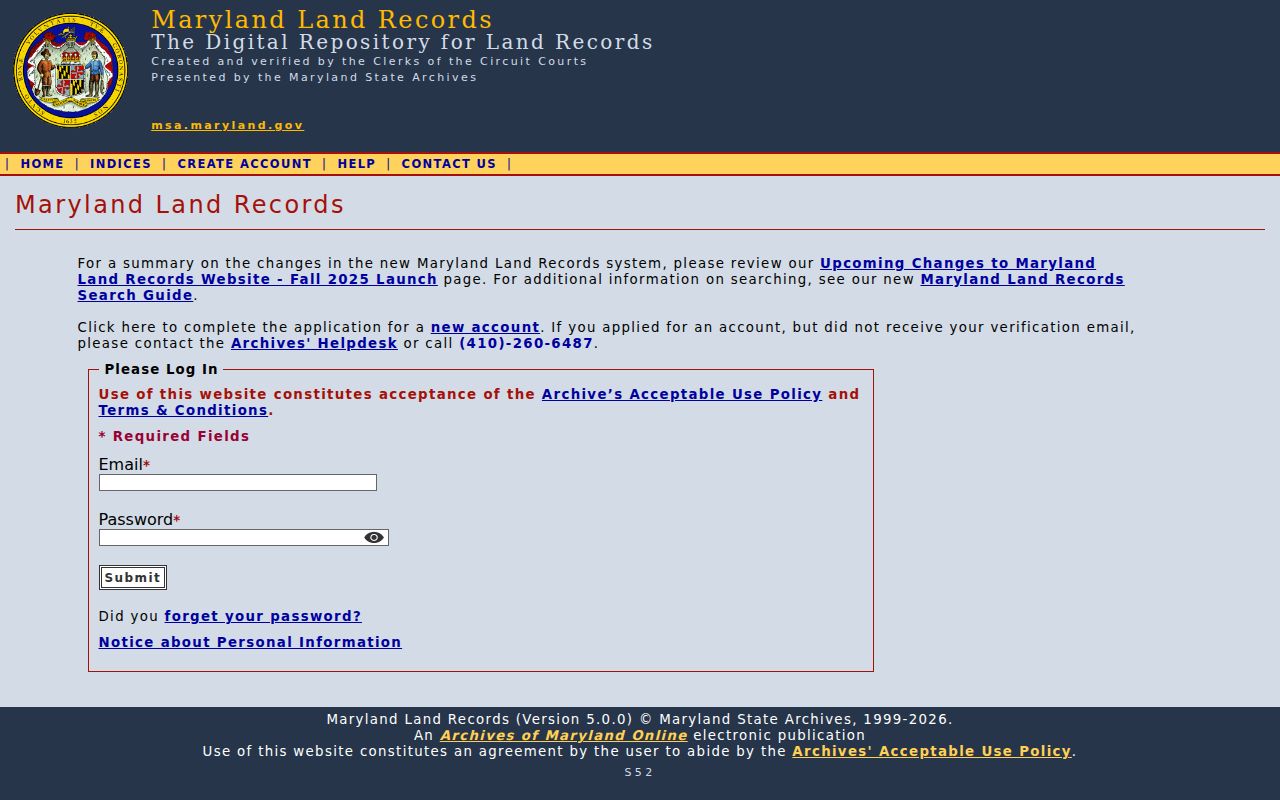
The index ties names to dates, books, pages, and images. That linkage is a starting point only. Read each linked instrument for its legal description and prior-reference language before assigning it to a particular house.
- Grantor
- The party transferring an interest in the instrument. In a sale, this is usually the seller.
- Grantee
- The party receiving an interest. Searching a later seller as an earlier grantee is how a deed chain moves backward.
- Chain of title
- The succession of recorded instruments that connects ownership or other legal interests over time.
- Legal description
- The lot, block, subdivision, plat, metes-and-bounds, or tract wording that identifies land more reliably than a changing street number.
Hyattsville Land Records CE411 Quirk
Prince George's County carries a release-index complication that can stall a clean backward search. Agreements, assignments, notices, and releases from 1966 through 1994 sit in historical index MSA CE411. Go back before 1966 and releases appear only on the related instrument. So a missing release in a modern text result may describe the index path. It does not mean the document never existed.
When a party search dead-ends, turn to the MDLandRec help for historical indices and the book and page route. The county's historical land-index series also includes C1240, covering 1851 through 1924. Related CE22 and CM771 series hold earlier material. Write down the series, book, page, and instrument type. That record lets the next lookup be repeated at the Clerk counter. It can also be repeated through archival channels.
The Clerk of the Circuit Court's Land Records Division offers a self-research counter in Upper Marlboro. Staff point researchers to public records and copies. They do not perform title or legal research for a visitor.
Hyattsville Address Records After 1941
Hyattsville's area-wide street-name change in 1941 is the key warning for previous residents research. Someone can seem to vanish between a directory and a deed for one simple reason. The older source used a former street name. Build a bridge table before searching. List the current street, former street, number, direction or suffix, nearest cross street, and the date of each form. Search every version across directories, land records, newspapers, and maps.
Named additions make another useful bridge. Hyatt's Addition to Hyattsville dates to 1859. Wine and Johnson's First Addition followed in 1882, and the Third Addition in 1923. Early instruments often identify land by addition, lot, block, and plat. That can matter more than a modern number. Later boundary changes add more layers. Ward, postal label, and incorporated-city status each mark a different period.
Myth. A current street address is not a permanent historical identifier. For a Hyattsville deed chain, the former name and legal description can matter more than the modern number.
Note: Search current and former street names alongside subdivision and plat terms before deciding an older record is unrelated.
Hyattsville Previous Resident Catalog Tip
Federal census snapshots leave big gaps, and directories help bridge them. For Hyattsville, the offline route runs through the Prince George's Room at the Hyattsville Branch. This noncirculating local-history collection holds newspapers on microfilm and a microfilm reader. It also keeps photographs of historic houses, magazines, journals, and reference works. Its online page does not publish a complete run of Hyattsville city or reverse directories. So treat it as a starting point. Search the catalog with staff help to pin down a title or year. Then record exactly what the page says, word for word. The Prince George's Room remains the anchor for tracing Hyattsville previous residents through these holdings.

Think of the collection as a bridge between property rolls and household evidence. It cannot promise every address or every year. Pair an address-directory entry with the closest released census year. Let them disagree if they must. A directory may name a head of household, subscriber, adult occupant, or business contact, while the census captured the household on its own enumeration date.
- Find the historic address or criss-cross entry and copy the name, street number, spelling, abbreviations, telephone, and directory year.
- Read the alphabetical section for spouse, occupation, employer, moved notation, and related surnames where present.
- Compare the dated directory finding with the nearest released census schedule, recording both dates rather than treating either as continuous proof.
- Use a deed, obituary, probate file, newspaper notice, or permit to test a move, death, inheritance, or construction change.
One catalog tip from the Prince George's Room research note: begin with an asterisk, then filter Assigned branch to the Hyattsville Branch and the Prince George's Room Collection designation. Broader methods sit in the Hyattsville city directory collections.
Hyattsville Address Records on Sanborn
The Library of Congress 1933 Hyattsville Sanborn map spans 11 sheets. It documents buildings and streets, not people. Building footprints, materials, use, and street names give you context. That context can be revealing. It can show whether an old directory address and a modern parcel describe the same spot. Set the map's street names and lot layout against SDAT, GIS, deed descriptions, and the 1941 name bridge. Do this before concluding anything about past residents. Sanborn evidence shines where an older deed cites a plat, addition, or former street label. It supports careful claims about a structure or block at the map date. Still, it cannot establish occupancy on its own. Only a dated directory, census, deed, or other person-bearing source can do that.
Note: Test address continuity with the Sanborn sheet. Then return to person-bearing records for any conclusion about past residents.
Hyattsville Resident Estate Records
Sometimes the last link in a past-residents trail is a permit, an obituary, or a probate file. LookSee shows only lettered Momentum records. So a permit missing online may simply live in an older paper system. A Maryland Public Information Act request to a city or county custodian can surface existing permit or code records. Provide the request names the address, record type, and date range. Read permits carefully. They can date construction, an inspection, or an application, but they never prove ownership.
For an estate connection, search the deceased person's full name, spouse, former address, and newspaper date. Then move to Register of Wills or probate channels for a personal representative or heirs. Probate can tie an owner to a successor. Some private address details may stay sealed or redacted, though. The PGCMLS Discovery Suite and the Prince George's Room point the way to local newspaper, genealogy, and historical search routes. These are useful for past residents of Hyattsville.
Hyattsville Previous Residents and Privacy
Records support dated, narrow claims, never full biographies of everyone tied to an address. A deed records a legal transaction, nothing more. An assessment gives an owner line plus correspondence or premises fields. A directory can skip children, boarders, recent movers, or anyone its publisher left out. Obituaries and court files carry access limits. Maryland Safe at Home participants may use substitute addresses. Some court or vital records stay confidential by law.
Lawful use. Hyattsville house-history research is appropriate for family history, estate questions, preservation research, and personal curiosity. Never use a past address trail to stalk, harass, intimidate, or harm a living person.
Keep the source, date, and uncertainty beside every finding. That habit pays off. It shows whether "who lived here before" means a deed owner, a directory listing, a census household member, or someone named in a dated public notice.