
Tracing a Hyattsville Street
Start a Hyattsville street-by-street search with one exact number and street name. The public property record gives you the parcel identity. It also carries the deed reference linking the lot to recorded land instruments. GIS mapping then separates the target lot from the ones beside it. A voter file or a historical city directory adds a person layer. But neither is a resident list. Maryland's individual voter lookup verifies a known name only. It cannot browse a street. Keep owner, postal contact, registered voter, permit applicant, and past occupant as distinct roles. A dated record is what connects them.
- Normalize the address with USPS, then search the parcel by street number and name in Maryland SDAT Real Property Data Search. Save the premises address, mailing address, parcel identifiers, legal description, and deed reference.
- Open the same location in the county GIS map. Identify the property polygon, its property ID, and adjoining parcels before assuming that a corner, alley, or side lot belongs to the same street address.
- Check LookSee Property Explorer for lettered Momentum permit, license, or enforcement records connected with that address. A result can date an application or action, not prove occupancy.
- Use the SDAT deed reference in Maryland Land Records. Record the grantor, grantee, recording date, book, page, legal description, and any prior-deed reference.
- For a lawful election purpose, request the county street-index or permitted voter product rather than trying to turn the individual lookup into a street browser. For earlier households, ask the Prince George’s Room about address or criss-cross directories.
That ordering keeps the trail stable. Parcel and legal-description fields survive name changes better than a remembered mailing address, while dated directory pages answer a separate historical question about who lived somewhere long ago.
Hyattsville Street Directory Records
Address-keyed records in Hyattsville sit with different custodians. The right source depends on what you need. You might need the parcel, a transaction, a permit, a registered voter, or an earlier household. The table below separates what each record can show from what it cannot establish. It also flags a common trap. A tax mailing address should never be read as a current home address.
| Address record | Hyattsville keeper | Street result | Access route |
|---|---|---|---|
| SDAT assessment | Maryland Department of Assessments and Taxation | Owner shown on last deed, premises and mailing addresses, parcel, transfer, deed reference | Free public search by address, street, PAN, or map reference |
| GIS parcel map | Prince George’s County GIS | Parcel polygon, property ID, adjoining geometry, mapped civic and public-land layers | Free map identify, query, and export service |
| Permit and case layer | County DPIE LookSee | Lettered Momentum permit, license, or enforcement connection | Street number plus street name, or a full reference |
| Recorded instruments | Clerk of the Circuit Court and MDLandRec | Grantor, grantee, instrument, book/page, record date, legal description | Online index and historical routes; Clerk counter copies |
| Election products | State and county elections offices | Registered-voter information in permitted files; walking lists can be street sorted | Request, fee, oath, and statutory-use restrictions |
| Historic directories | Prince George’s Room and library collections | Address-to-name evidence, sometimes telephone, spouse, or occupation details | Catalog, staff, microfilm, and licensed database routes |
The street directory works best with the parcel as the join point. Carry the SDAT parcel data into GIS. Take the deed reference to MDLandRec. Bring the historic street spelling to the library sources. A mailing address, an owner-occupancy assessment code, and an actual household are three different things. Collapsing them into one claim is the fastest way to a wrong answer.
Note: A permitted voter walking list is not a household roll. It carries an electoral-purpose oath with use restrictions.
Hyattsville Street Search Tip
SDAT makes a practical first stop for Hyattsville parcels. You can search it by address, street name, PAN, or map reference. The public interface offers no owner-name, town, neighborhood, subdivision, or ZIP search. Start by selecting Prince George’s County. Then pick a search method. Type the street name without its direction or suffix. The official instructions use “Preston,” not “West Preston Street.” A shortened wildcard like Pr* is also permitted. Nothing coming back? Drop the number and confirm the street spelling first.
| SDAT field | Use for a Hyattsville address |
|---|---|
| County | Select Prince George’s County. |
| Search method | Address, street name, property account identifier, or map reference. Owner name and ZIP are not public search methods. |
| Street number | Use for an exact address, or leave blank to test street matches. |
| Street name | Omit direction and suffix; a truncated wildcard can broaden the search. |
| PAN | Use a known property account identifier, including the county and assessment components. |
| Map reference | Use map, grid, and parcel components when an older description lacks a usable number. |
Insider tip. SDAT’s directions-and-suffix rule matters most when a Hyattsville street search comes back empty. The local-government number can differ from the number an owner or building actually uses. Test the street before deciding the parcel is absent.
SDAT updates daily and labels its information as informational rather than a legal report. Its account page can show the owner line from the last recorded deed, mailing and premises addresses, the legal description, assessment data, the transfer date, and map/grid/parcel fields. It does not list everyone living at the property.
Hyattsville Parcel Layers by Street
The Prince George’s County GIS Property MapServer adds the geometry a plain property result lacks. Its parcel boundaries are graphical representations drawn from deeds, recorded subdivision plats, and road-right-of-way plats. The service supports identify, find, query, legend, and export operations. The layers cover more than property polygons. They also include HOA and civic-association boundaries. Public land, county-owned parcels, and pending properties appear too. Walk a block visually on the map. Then verify each parcel through its property ID or legal description.
The official county parcel-layer service shows the mapping controls. It also shows the layers available for a Hyattsville address search.
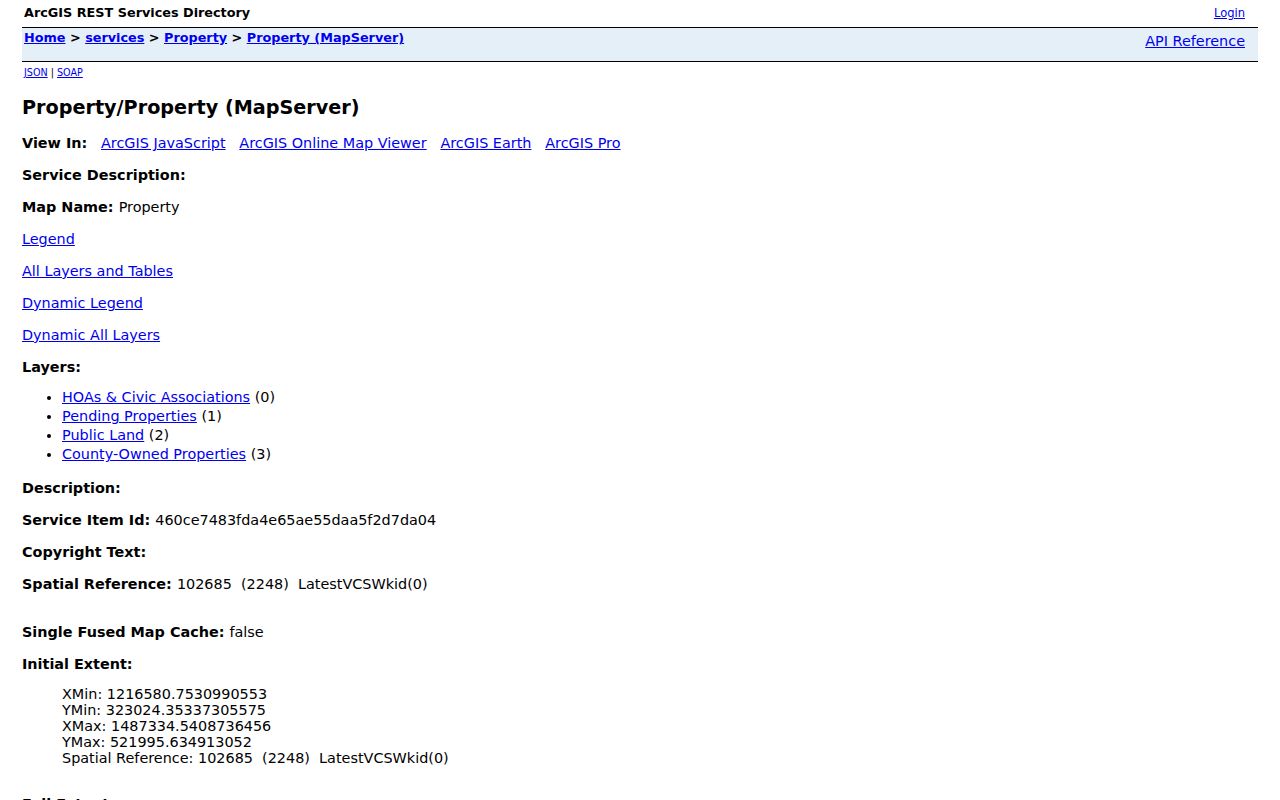
A mapped boundary identifies a parcel and its surrounding geometry. It does not turn the neighboring polygons into an occupant roster or prove who currently lives at an address.
- Parcel
- A defined piece of land tracked in tax and mapping records, often identified by map, grid, and parcel fields.
- Premises or situs address
- The physical location assigned by local government. It may differ from the owner’s mailing address.
- Plat
- A recorded map of a subdivision or land division. It can preserve lot layout when a modern street number changes.
- Criss-cross directory
- An address-arranged directory that can point from a street number to a listed person, unlike an alphabetical name section.
Hyattsville LookSee Address Cases
LookSee adds a county permit, license, and enforcement layer to the street-address process. Its Property Explorer accepts a full reference number or a Street # and Street Name. Results are limited to Momentum records with lettered identifiers. An empty response does not mean the address lacks older paper permits or code history. When a useful record appears, preserve the address, reference, record type, and date. Then chase the custodian file behind it.
Prince George’s County LookSee Property Explorer shows the address-search fields. Those fields drive the Hyattsville permit trail.
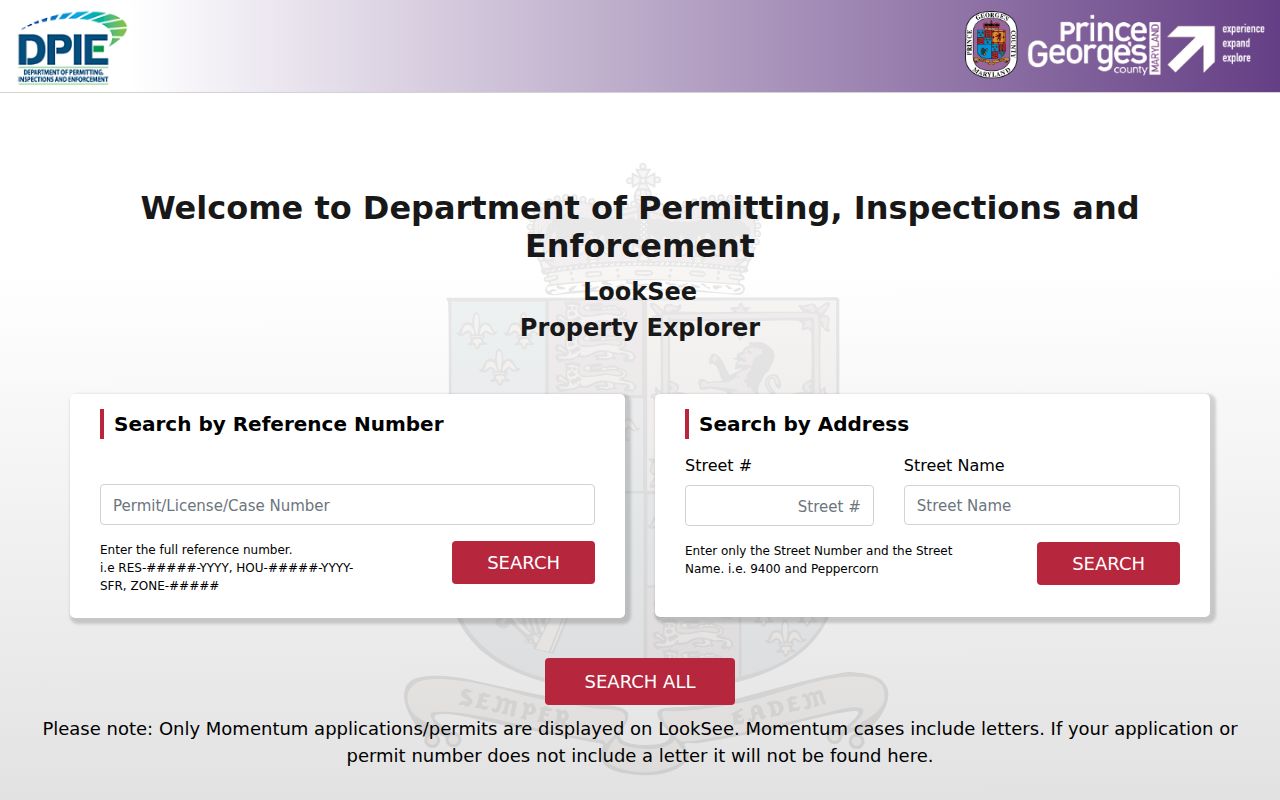
LookSee can tie an address to an application or enforcement action. It complements SDAT and the land records. It replaces neither one.
An older record may not surface in the portal. You can request existing city or county material under the Maryland Public Information Act. Include the exact address, the permit or case type, and a date range. Ask for records the custodian already maintains, not a new report built from scratch.
Note: LookSee shows only lettered Momentum records. An older address trail may need a custodian request or a counter search.
Deed Trails Along Hyattsville Streets
Deeds are the ownership layer beneath any Hyattsville street search. Start with the current SDAT deed reference. From there, open the MDLandRec index entry or follow the book-and-page route. A deed image names the seller and buyer. It gives the recording date and consideration, and it often carries a legal description or a prior-deed reference. To find how a person acquired the property, search that seller as a grantee in an earlier period. The legal description, lot, block, subdivision, or plat can stay usable. That holds true even after the street number stops matching.
The Prince George’s County Land Records Division holds the public records. Its self-research counter sits at 14701 Gov. Oden Bowie Drive in Upper Marlboro, open Monday through Friday, 8:30 a.m. to 4:30 p.m. Staff will not run title searches or legal research for you. The counter and online channels both shine once an index points to a book or image. The county Land Records counter information documents the custodian. It also documents the self-research route behind every Hyattsville deed trail.
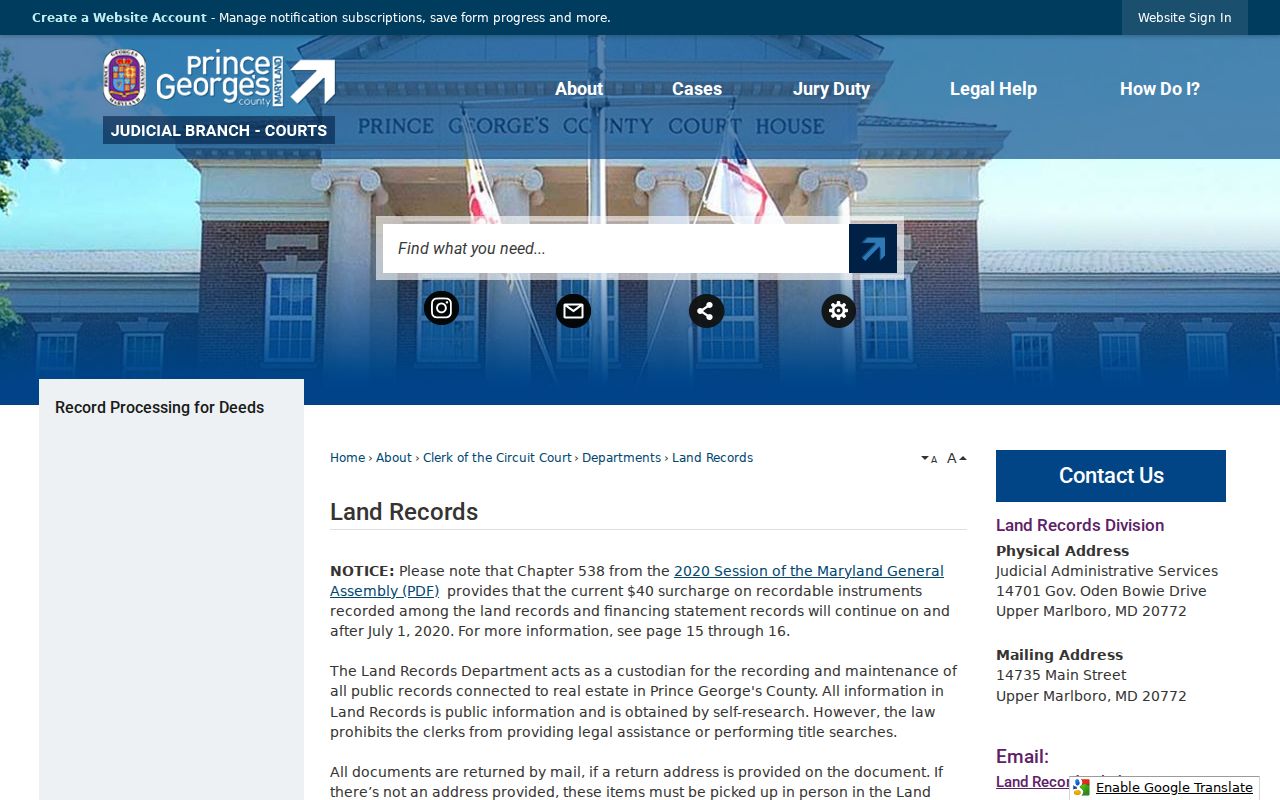
For book-and-page work and older instruments, the counter route is the practical fallback. It will not certify a current resident list for any Hyattsville street.
Hyattsville Street Names in 1941
Hyattsville changed its street names across the whole area in 1941. That matters. A deed, directory, or newspaper can seem to lose a household. The record simply carries the former name while SDAT or GIS carries the current one. Build a working bridge for each street. List the current name, former name, number, direction or suffix, and nearest cross street. Search both forms before dismissing a result as unrelated.
The 1941 change weighs most on street-record work that crosses the early and modern systems. Additions and later boundary changes complicate things. Ward, postal city, and street label are not interchangeable terms. A 1933 Sanborn map helps here. It lets you compare old street nomenclature and building placement against a modern parcel.
Note: Keep former and addition names beside the modern address, because either may be the only searchable form in an older instrument.
Hyattsville Street ZIP Myth
Myth. A Hyattsville postal ZIP does not prove an address sits inside the incorporated city. USPS supplies delivery labels. SDAT carries premises and town fields. GIS maps the parcel. The Clerk preserves the legal description. SDAT does not accept ZIP as a public property-search method. LookSee searches by street number and name rather than ZIP. Confirm the delivery format with USPS. Then follow the premises, town, GIS, and legal-description fields for the parcel trail.
Hyattsville Additions and Street Searches
Historic additions give a Hyattsville address search a second vocabulary. Hyatt’s Addition to Hyattsville dates to 1859. Wine and Johnson’s First Addition dates to 1882. The Third Addition dates to 1923. An older land instrument may describe a lot by one of those names, a subdivision, lot and block, or a plat reference instead of a modern house number. Record those terms in a deed-chain notebook beside the parcel identifier.
The county’s historical land-index series matters when the electronic text index stops. Archives guide C1240 covers Prince George’s Circuit Court land-record indices from 1851 through 1924. It includes related older series. Historical and retired indexes, plus MDLandRec’s book-and-page jump, bridge a current Hyattsville street to that earlier material.
Past Addresses in Hyattsville Directories
Address-arranged and criss-cross directories add a household layer that owner records cannot supply. The Prince George's Room at the Hyattsville Branch is a noncirculating local-history collection. It holds historic newspapers on microfilm, a reader, photographs, reference works, and county materials. Its public page does not publish an exhaustive Hyattsville run of reverse, city, or telephone directories. So confirm each title and year through the catalog and staff rather than assuming a complete shelf.
A historic directory usually takes two reads. Find the address in the street section first. Then read the alphabetical entry for a spelling variant, spouse, occupation, employer, or telephone detail. Entries may represent heads of household, adult occupants, or subscribers. They may not cover everyone at the property. The historical volumes are described more fully in the Hyattsville city directory collections.
- Record the directory title, publisher, and year or stated period.
- Copy the street spelling and number exactly as printed.
- Check the abbreviation key before interpreting a symbol or status mark.
- Search adjacent addresses and the alphabetical section for a cross-reference.
Note: A directory entry may name only a subscriber or head of household at that address, not everyone who lived there. Keep that limit in mind when tracing past residents of Hyattsville through street directory records.
Hyattsville Street Directory Limits
No street directory proves every person physically present at a Hyattsville property. SDAT records an assessment and ownership trail, not utility customers or a household census. A deed records a legal transaction. A permit records an application, inspection, or enforcement connection. Even a permitted voter file reflects registration information and carries its own use limits. Maryland Safe at Home participants can use a substitute address, and protected or unlisted people may not appear in the sources used here.
Lawful use. Hyattsville address records support personal, historical, civic, and property research. Do not use them to stalk, harass, intimidate, or harm anyone.
Address records tell you who lived where, not the whole story of one person. To check a named individual against official sources, the Hyattsville resident lookup is the better tool for a resident directory search.